Marriage as a Sacrament
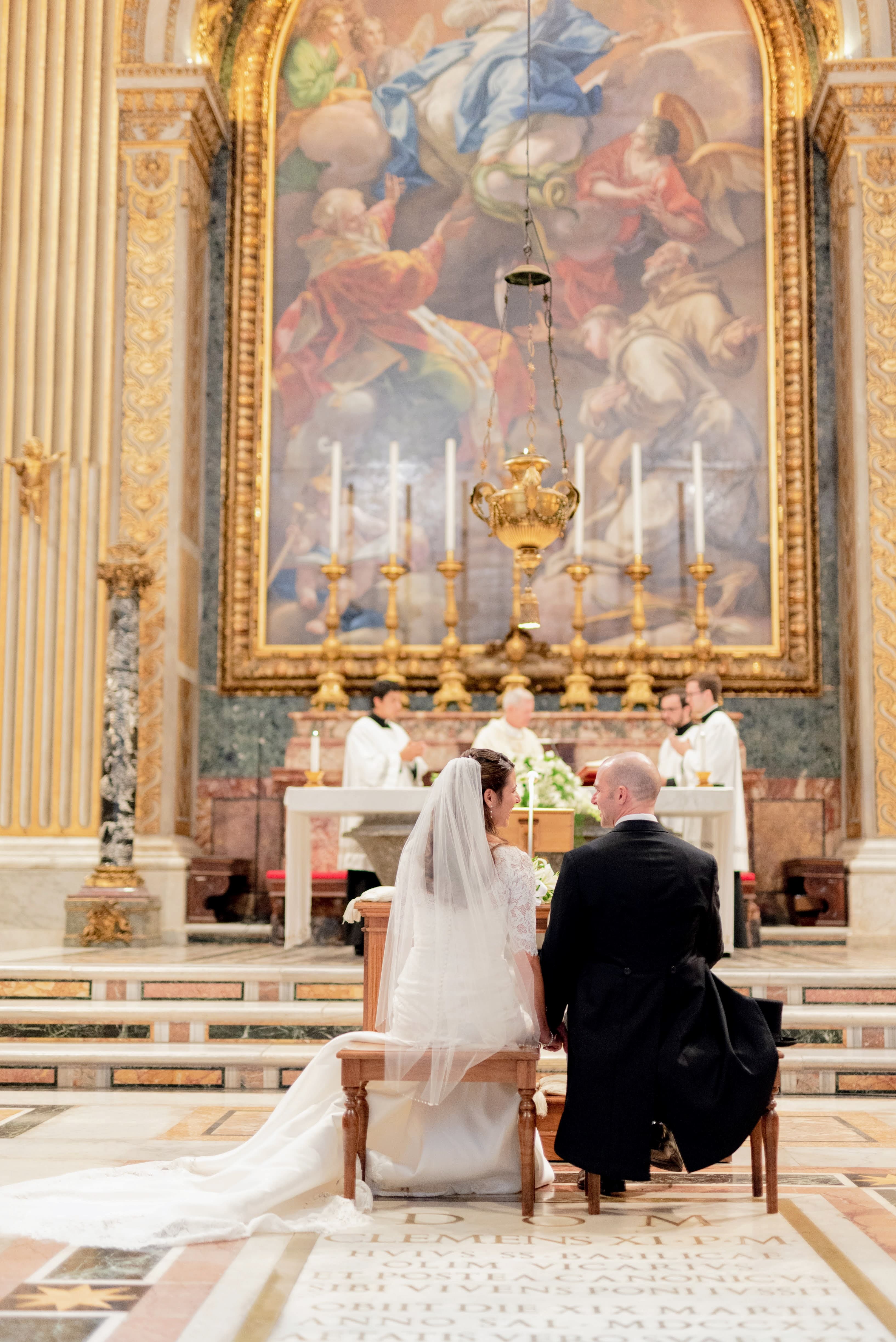
What Makes Marriage a Sacrament?
Catholic marriage is not just a legal contract or a beautiful party. It is a sacrament, a visible sign of God's invisible grace. When two baptized people marry in the Catholic Church, they enter into a sacred covenant that reflects Christ's love for the Church and confers divine grace to live that love faithfully for life.
What Makes Marriage a Sacrament
Four essential elements distinguish sacramental marriage from civil marriage or cultural celebrations.
Marriage is a permanent, faithful, fruitful, and total self-giving covenant. A contract can be dissolved; a covenant is an irrevocable bond. When two baptized Christians marry, they enter into a sacred covenant modeled on the bond between Christ and his Church.
Ephesians 5:25-33 teaches that marriage reflects the mystery of Christ and the Church. Just as Christ gave himself for the Church, spouses give themselves to each other. Christ himself is present in the sacrament, not as a witness but as the one who unites the couple and sustains their love.
The sacrament confers sanctifying grace and a permanent mark (sacramental character) that strengthens the couple for their lifelong vocation. This grace is not a one-time gift but an ongoing source of strength to love sacrificially, forgive, and persevere.
In Catholic theology, the couple themselves are the ministers of the sacrament. Their mutual consent, freely given, is the matter and form. The priest or deacon witnesses and blesses the union, but the couple confers the sacrament upon each other. Their love and fidelity become a visible sign of God's invisible love.
Biblical Foundations
Scripture is the foundation of the Church's teaching on marriage as a sacrament. These five passages are central.
"Therefore a man leaves his father and his mother and clings to his wife, and they become one flesh." This foundational text establishes marriage as a divine institution from creation, a total union of body, soul, and life.
This entire book of Scripture celebrates the beauty, passion, and faithfulness of married love. The Church has always read it both literally (as a celebration of human love) and spiritually (as an image of God's love for his people).
"So they are no longer two, but one flesh. Therefore what God has joined together, let no one separate." Jesus himself affirms the permanence of marriage and its origin in God's creative plan.
"Husbands, love your wives, just as Christ loved the church and gave himself up for her." This passage is central to Catholic teaching on marriage as a sacrament: the mutual self-giving of the spouses reflects and participates in Christ's self-giving love.
Jesus' first public miracle took place at a wedding. By turning water into wine, he blessed and honored marriage. This sign points to the abundance and joy of the sacramental life Christ offers to married couples.
Church Teaching Through History
The Church's understanding of marriage as a sacrament has been consistently affirmed and developed through major councils and papal teachings.
The Council formally defined marriage as one of the seven sacraments and condemned the Protestant view that marriage was not a sacrament instituted by Christ. This clarified Catholic teaching for the modern era.
This key document described marriage as an "intimate partnership of life and love" established by the Creator and governed by his laws. It emphasized mutual love, fidelity, and the sacredness of the marital covenant.
This apostolic exhortation on the family affirmed the family as the "domestic church" and outlined the fourfold mission of the Christian family: forming a community of persons, serving life, participating in society, and sharing in the Church's mission.
"The Joy of Love" is a pastoral exhortation that addresses the beauty and challenges of family life. It calls for accompaniment of families in all stages, emphasizes the importance of formation and preparation, and offers a hopeful vision of married love.
Common Questions
These are the most frequently asked questions about marriage as a sacrament.
Yes and no. If a baptized non-Catholic marries a Catholic, the marriage can be sacramental but requires Church permission (mixed marriage or disparity of cult). If one partner is unbaptized, the marriage is valid and blessed by the Church but is not technically a sacrament, because sacraments require baptism. It becomes sacramental if the unbaptized partner later receives baptism.
The wedding is the public celebration and ceremony. The sacrament is the spiritual reality that begins with the couple's consent and lasts for life. You can have a beautiful wedding without a sacrament (e.g., if one partner is unbaptized), and you can have a sacrament without an elaborate celebration. The essence is the couple's free, total, and irrevocable consent witnessed by the Church.
Because marriage is a sacrament and a lifelong vocation, not just a legal or social contract. Preparation helps couples understand what they are committing to, develop skills for communication and conflict resolution, explore their faith together, and receive the support and blessing of the parish community. It is an investment in the success and holiness of the marriage.
No. For a marriage to be a sacrament, it must be witnessed by the Church (priest or deacon) and freely entered into according to Catholic norms. A civil-only wedding between two baptized Catholics is not recognized as valid by the Church and is not sacramental. However, the couple can later have their marriage "convalidated" (blessed by the Church), at which point it becomes sacramental.
Understanding marriage as a sacrament helps couples prepare for the spiritual reality they are entering. It is not just about the wedding day, but about a lifelong journey of grace, fidelity, and shared holiness.